
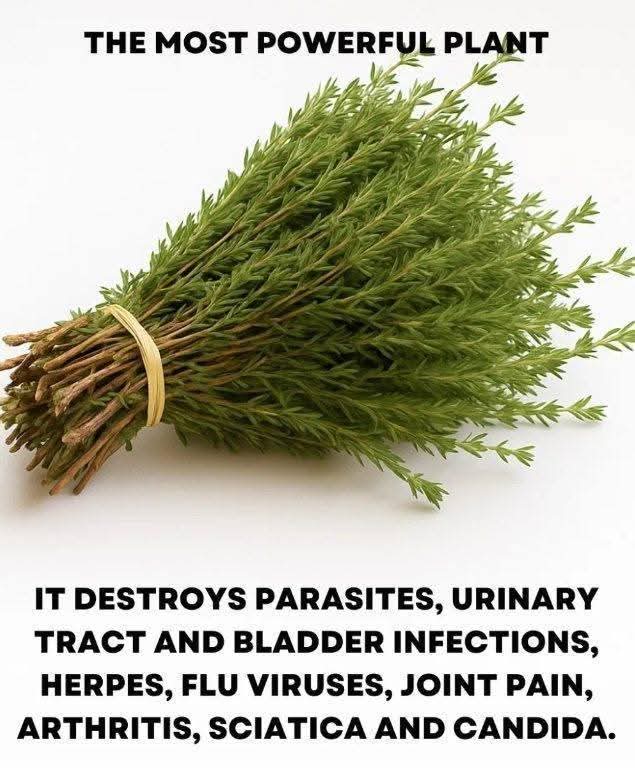
Here’s a big overview exploring one of the herbs often cited as “the most powerful plant” for tackling parasites, urinary / bladder infections, herpes, flu viruses, etc. — with caveats. I’ll include a kind of “recipe” for how people use it (tea, tincture, etc.), plus introduction, history, formation (how it works / how to prepare it), conclusion, and who typically loves or uses it (and reasons to be careful).
⚠️ Important caveat: This is not medical advice. Always consult a healthcare professional before using herbs, especially for serious conditions.
🌿 Introduction: What’s the “Power Herb”?
The herb most often named in these “miracle plant” claims is (Sweet Wormwood / Qing Hao). Some sources also point to (especially its essential oil) for broad antimicrobial, antiviral, and anti‑parasite properties.
Here’s what the claims often are:
- It can help eliminate intestinal parasites / worms
- It may support urinary tract & bladder infections
- It may inhibit viruses like herpes or influenza
- It’s used in teas, tinctures, capsules, and topical applications
Because the claims are broad and strong, it’s important to inspect the evidence, know safe dosage limits, and understand risks.
📜 History & Traditional Use
- Artemisia annua has been used in traditional Chinese medicine for centuries (for fevers, malaria, etc.). Its extract artemisinin is a well‑known anti‑malarial drug.
- Oregano / oregano oil has a long tradition in Mediterranean herbalism, used for infections, digestive issues, respiratory conditions, etc.
- Many folk and “alternative medicine” sources combine wormwood (Artemisia) with other herbs known for antimicrobial or anti‑parasitic action (e.g. olive leaf, cloves) in formulations.
Over time these herbs have gained popularity in wellness circles — sometimes with exaggerated claims. Some use them as a “tonic” rather than as a primary treatment.
🧪 Formation & How It’s Used (The “Recipe” / Methods)
Below are typical ways people prepare and use Artemisia annua (or blends). Again: consult a professional before using internally.
💧 1. Tea / Infusion
- Use 1–2 teaspoons dried leaves (or herb)
- Steep in hot water (≈ 200 °F / just below boiling) for 10 minutes
- Strain and drink 1–2 cups per day
🌿 2. Tincture / Extract
- Use drops of a concentrated liquid form (often alcohol‑based)
- Typical doses might be 10–20 drops diluted in water, 2–3 times per day (depending on product)
💊 3. Capsules / Pills
- Commercial products standardized for active compounds (e.g. artemisinin)
- Follow manufacturer’s recommended dose
🧴 4. Topical Application
- For skin / herpes sores, some mix powdered herb or extract into a carrier oil
- Apply to the lesion (after dilution) — some sources recommend this for herpes outbreaks
🔄 5. Blended Formulas
- Some herbal preparations mix Artemisia with olive leaf, cloves, ivy extract, etc. for broader coverage (parasites + microbes)
People often cycle usage (e.g. use for a few weeks, then pause) to avoid toxicity or resistance.
✅ What Does Research Support?
- Artemisinin is clinically used against malaria parasites, with strong scientific backing.
- Some in‑vitro (lab) studies show antiviral or antimicrobial effects of Artemisia extracts (e.g. against certain viruses, bacteria).
- Oregano oil’s compounds (carvacrol, thymol) show antimicrobial and antiviral potential in lab studies.
- BUT: Much of the evidence is in vitro or animal studies — not strong, conclusive human clinical trials for many of the broad claims.
- Many herbs can interact with medications, have side effects, or be unsafe in pregnancy, etc.
⚠️ Risks & Precautions
- Long-term or high-dose use of Artemisia may be harmful to liver or kidneys, or have other toxic effects.
- Essential oils (like oregano oil) should be diluted; ingestion or skin application without care may cause irritation, toxicity, or interactions with drugs.
- Not safe for pregnancy, young children, or when on certain medications (anticoagulants, immunosuppressants, etc.).
- Skin patch test recommended before topical use.
- Always consult a qualified herbalist or doctor when using herbs, especially for infections or viruses.
💖 Who Usually Loves / Uses It
- Herbalists / natural health enthusiasts seeking broad-spectrum support
- People looking for alternatives or complements when dealing with recurring infections
- Those drawn to traditional / folk medicine
- Individuals who appreciate plant-based remedies and preventive wellness
- People who are informed and cautious, who research dose and safety
🏁 Conclusion & Balanced Perspective
Yes, Artemisia annua (and herbs like oregano) have a fascinating track record, traditional usage, and some promising laboratory science behind them. They may offer support for parasites, infections, or viral conditions — but far from a guaranteed “cure-all.” Responsible use, proper dosing, medical oversight, and realistic expectations are essential.
So: consider them tools, not miracle guarantees.
If you like, I can help you format a safe “herbal usage guide” (with dosage ranges, warnings, quick reference) that you can keep as a reference — would you like me to do that?