
Absolutely! Here’s a complete and beautifully structured guide based on the title:
“How to Make Your Mother-in-Law’s Tongue Bloom and Perfume Your Entire Home”
Though it sounds like a culinary recipe, this is clearly about a plant—specifically, the Mother-in-Law’s Tongue, more formally known as Sansevieria or Snake Plant. While these plants are typically known for their striking foliage, some varieties can indeed bloom under the right conditions, and their flowers can emit a sweet, jasmine-like fragrance, often at night.
Let’s dive into a full write-up that includes everything from care to blooming tips, written in a way that feels like a “recipe” for success 🌿
🌸 How to Make Your Mother-in-Law’s Tongue Bloom and Perfume Your Entire Home
A Fragrant Miracle from One of the Hardiest Houseplants on Earth
🌿 Introduction
The Mother-in-Law’s Tongue (Sansevieria) is one of the most resilient and popular indoor plants worldwide, celebrated for its sword-like leaves, air-purifying qualities, and low-maintenance care. But what many don’t know is this stoic plant can bloom delicate, fragrant flowers—an event so rare that it feels like catching a shooting star in your living room.
With the right care, patience, and a bit of “plant whispering,” you can coax this quiet guardian into flowering, filling your home with a soft, sweet perfume—an unexpected delight from such a bold plant.
🌍 Origin & Cultural Significance
Native to West Africa, the Sansevieria has traveled the globe due to its incredible adaptability. In many cultures, it’s seen as a protector plant, believed to ward off negative energy, and it’s also a symbol of strength, resilience, and longevity.
- In Feng Shui, it’s said to absorb toxins and bad vibes, creating a calm, clear energy flow.
- In traditional African homes, it’s often grown for its spiritual and medicinal symbolism.
- Known as “Tiger’s Tail,” “Snake Plant,” or “Sword of Saint George” in different cultures, it’s a beloved icon in many households.
🌱 Ingredients (What You’ll Need)
(Think of this as a gardening recipe!)
- 🪴 One mature Mother-in-Law’s Tongue (Sansevieria trifasciata)
- ☀️ Bright, indirect sunlight
- 💧 Low to moderate watering routine
- 🧂 Well-draining cactus or succulent soil mix
- 🪨 Pot with drainage holes
- 🌡️ Warm environment (18°C to 27°C / 64°F to 81°F)
- 🌸 A little patience and stress (yes, stress!)
🌟 Optional Additions
- 🧴 Diluted liquid fertilizer (high in phosphorus) during the growing season
- 🧂 Add perlite or coarse sand to soil for extra drainage
- 🌾 Terracotta pot to help wick away excess moisture
- 🕯️ Humidity tray (optional, but can help during dry seasons)
- 🧪 Use seaweed extract as a natural growth booster
🧠 Tips for Success (Blooming Secrets)
- Age Matters – Blooming usually happens in mature plants, often 4–5+ years old.
- Controlled Neglect – These plants bloom when slightly “stressed” by conditions like tight roots, slightly dry soil, or a sudden light boost.
- Bright, Indirect Light – Direct sunlight can scorch leaves; indirect sun encourages blooming.
- Water Sparingly – Let soil dry out completely between waterings. Overwatering prevents flowering.
- Use the Right Pot – Rootbound Sansevierias are more likely to bloom. Avoid frequent repotting.
- Fertilize Smartly – In spring/summer, feed once a month with a low-nitrogen, phosphorus-rich fertilizer.
- Temperature Counts – Avoid cold drafts or temps below 10°C (50°F). Warmth encourages flower spikes.
- Watch the Signs – A thin, tall stalk will emerge from the base—this is your flower spike!
📜 Instructions: How to Coax Your Sansevieria to Bloom
- Choose a Healthy, Mature Plant: Ensure your plant is well-established, with full, upright leaves.
- Keep It Rootbound: Don’t repot frequently. Let roots crowd slightly in the pot.
- Provide Consistent Light: Place in a spot with bright, filtered light (like near a window with sheer curtains).
- Reduce Watering: Water only when soil is completely dry—typically every 2–4 weeks depending on humidity.
- Apply Fertilizer (Spring/Summer): Use a phosphorus-rich formula once per month. Stop fertilizing in fall and winter.
- Let It Rest in Winter: Cooler nights (around 15°C/59°F) can encourage blooming in the following season.
- Be Patient: Flowering may occur once a year or every few years, often in late spring or early summer.
🌸 Description of the Flower
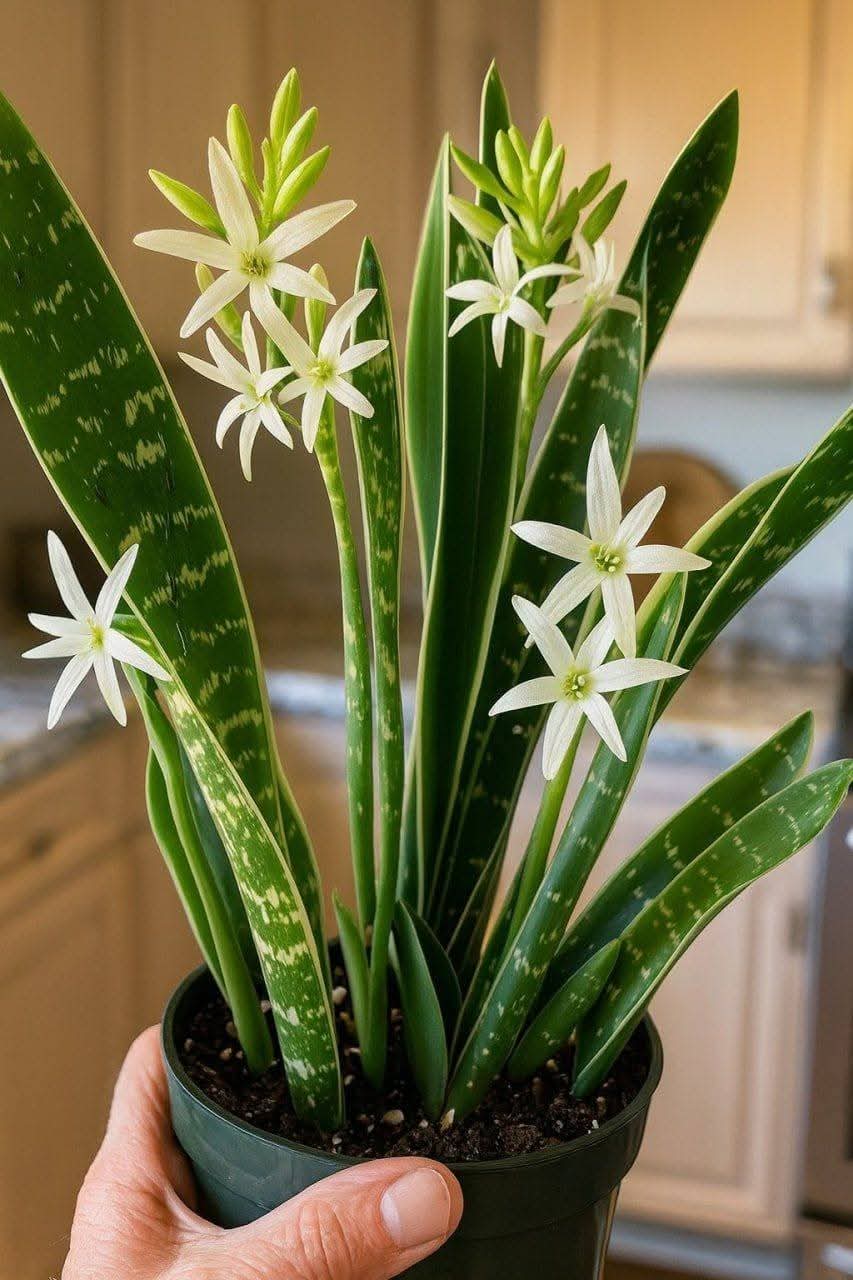
The flowers are creamy-white or greenish, growing on a tall slender stalk up to 3 feet tall. They may appear like tiny lily blossoms and open at night, releasing a jasmine-like fragrance that can perfume an entire room.
It’s a fleeting but magical bloom—usually lasting only a few weeks, but unforgettable.
🧪 Nutritional Information (Air Quality Benefits)
Sansevieria doesn’t feed you—but it feeds your lungs and mind:
- ✅ Removes toxins like formaldehyde, benzene, xylene
- ✅ Produces oxygen at night (rare among plants!)
- ✅ Helps with sleep quality, making it ideal for bedrooms
- ✅ Boosts humidity, supports respiratory health
- ✅ Easy for those with busy lives or “brown thumbs”
🪴 Conclusion & Recommendation
While most people enjoy Sansevieria for its bold leaves and air-cleaning abilities, few know it can bloom into a fragrant miracle. By giving it just the right balance of love, light, and stress, you’ll unlock one of nature’s quietest secrets.
We recommend:
- Giving it a prime spot near indirect light
- Being patient and consistent
- Sharing the bloom moment when it happens—it’s worth celebrating!
💚 Embracing Healthful Indulgence
In a world of fast-paced everything, encouraging your Mother-in-Law’s Tongue to bloom is an exercise in mindful nurturing. It’s a chance to slow down, tune into your environment, and appreciate the quiet rewards of care and time.
You’re not just growing a plant—you’re cultivating calm, clean air, and perhaps, a little indoor magic.
Would you like this turned into a shareable social post, a printable care card, or a blog article? Just say the word! 🌿