
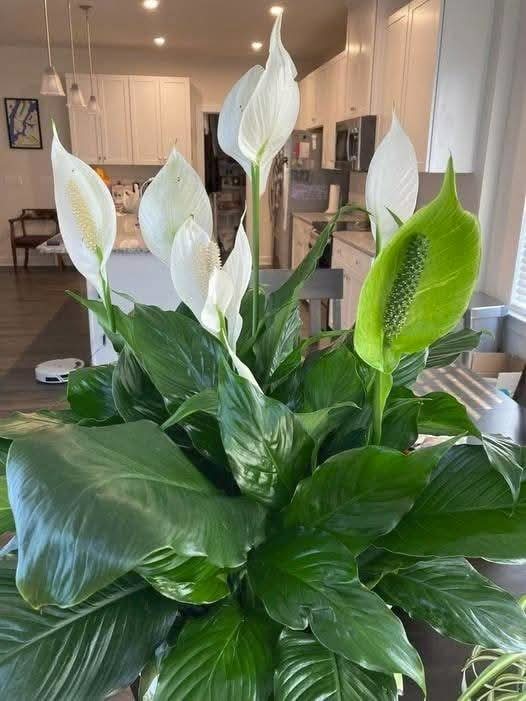
Absolutely — here’s a complete, heartfelt write-up for your Peace Lily Story & Care Guide, structured as you requested. Since this is about a plant and not a recipe, I’ll adapt sections like “Ingredients” to focus on plant care materials, and “Nutritional Information” to highlight plant benefits. This can be used as a blog post, Instagram caption, or part of a longer tribute or plant-care guide.
—
🌿 How We Got Mom’s Peace Lily to Bloom Again
A story of healing, hope, and one powerful plant.
—
Introduction
When someone we love passes, the things they leave behind often become sacred. After our mom passed away, we kept her peace lily as a living reminder of her love and calm presence. But no matter how much we tried, it wouldn’t bloom. It felt like even the plant was mourning with us.
Then, during a casual trip to Home Depot, we met a kind woman who gently shared some care tips—and they worked. Within weeks, our peace lily started blooming again. It felt like a little piece of Mom was smiling back at us.
So if you’re holding onto a peace lily—or just want to grow one that’s vibrant and full of life—here’s everything we learned.
—
Origin and Cultural Significance
The peace lily (Spathiphyllum) is native to the tropical rainforests of Central and South America. In many cultures, it symbolizes peace, healing, rebirth, and eternal life, which is why it’s commonly given at funerals and memorials.
In Christianity, its white flower is associated with the Virgin Mary and purity. In feng shui, peace lilies are believed to cleanse the energy of a room and bring harmony to a home. No wonder they’re often found in hospitals, memorials, and quiet corners of grieving hearts.
—
Ingredients Quantity (aka What You Need)
1 healthy peace lily plant (even if not blooming yet)
Well-draining pot with drainage holes
Indoor potting mix (preferably one with peat, perlite, and bark)
Filtered or distilled water
Balanced liquid houseplant fertilizer (20-20-20 or similar)
Indirect sunlight (bright, but not direct)
Soft cloth for dusting leaves
Optional: humidity tray or humidifier
—
Optional Additions
Grow light – if your space is low-light
Orchid fertilizer – some peace lilies respond well to this
Neem oil – for natural pest protection
Decorative planter – because aesthetics matter too
Music or gentle sounds – yes, some swear by it!
—
Tips for Success
(These are the exact ones the Home Depot angel shared!)
✨ Light, Not Direct Sun: Peace lilies need bright, indirect light. Avoid direct sun—it burns the leaves. East-facing windows are ideal.
✨ Water Properly: Let the top inch of soil dry out before watering. Use room-temp, filtered water if you can. Peace lilies are sensitive to fluoride and chlorine in tap water.
✨ Feed Every 6 Weeks: A diluted liquid houseplant fertilizer in spring and summer helps encourage blooms. No fertilizer in winter.
✨ Keep Leaves Clean: Wipe leaves with a soft, damp cloth weekly. Dust blocks light absorption.
✨ Repot When Rootbound: If roots circle the pot or poke out of drainage holes, it’s time to upgrade the pot.
✨ Humidity Helps: These tropical plants thrive in humid environments. Mist them or use a tray with water and pebbles.
✨ Talk to It: Maybe it’s not scientific, but treating your peace lily with love works wonders.
—
Instructions
1. Place your peace lily in a bright room, away from direct sunlight.
2. Water weekly, letting soil dry slightly between waterings. If it droops, don’t worry—water it and it’ll bounce back fast.
3. Fertilize every 6 weeks during the growing season (spring–early fall). Use a balanced liquid houseplant fertilizer diluted to half strength.
4. Maintain humidity around the plant—mist the leaves or use a pebble tray.
5. Repot if needed once a year or when rootbound. Choose a pot one size up.
6. Keep leaves clean and remove dead flowers/leaves to encourage new growth.
7. Be patient. Sometimes they bloom after a few weeks, sometimes after a few months—but with love and care, they will bloom.
—
Description
Peace lilies are graceful, glossy-leaved plants that bring calm to any space. When they bloom, their white spathes curl like a prayerful hand around the flower spike, resembling a white flag—hence the name “peace” lily. Each bloom can last for weeks, offering a powerful symbol of serenity and remembrance.
—
Nutritional Information (for the soul and home)
Air Purification: Peace lilies remove toxins like benzene, formaldehyde, and ammonia from the air.
Mood Boosting: Caring for plants reduces stress and fosters a sense of purpose.
Symbol of Healing: Especially powerful for those grieving or seeking a living memorial.
Pet Warning: Toxic to cats and dogs if ingested—keep out of reach.
—
Conclusion
What started as a fading symbol of our mother’s presence has become a source of comfort and pride. With the right care and a little encouragement, our peace lily bloomed again—and so did a piece of our hearts.
Plants have a way of teaching us about resilience, quiet strength, and hope. All it takes is patience, love, and the right conditions.
—
Recommendation
If you’re new to plant care or looking for a meaningful gift, peace lilies are a perfect choice. They’re forgiving, beautiful, and deeply symbolic. Consider gifting one to someone going through a hard time—you might be offering more than just a plant.
—
Embracing Healthful Indulgence
Taking care of a peace lily isn’t just plant care—it’s self-care. It’s waking up to green life, watching new leaves unfurl, and witnessing a bloom when you least expect it. It reminds us that life continues, gently, even in the face of loss.
Let yourself indulge in that kind of hope. Let yourself bloom too.
—
Would you like help turning this into a social media carousel, printable guide, or mini eBook tribute?