
Here’s a full, beautifully detailed “article-style” guide (not a recipe, since we’re talking plants!) on how to encourage your snake plant (Sansevieria / Dracaena) to bloom — with history, science, practical methods, and a bit of poetic flair for those who love their greenery. If later you want a compact “cheat sheet,” I can make that too.
🌱 Introduction & Why It Matters
Snake plants (often called mother-in-law’s tongue) are beloved for their hardiness, architectural elegance, and low-care reputation. Yet flowering is rare — many people never see a bloom in their lifetime of growing one. When it does happen, it’s a special reward: a delicate, fragrant flower stalk rising among the leaves, often opening at night.
Getting your snake plant to bloom isn’t guaranteed, but with the right conditions and patience, you can significantly increase your odds. Think of flowering as your plant saying, “I’m healthy, mature, and ready.”
📜 A Bit of Botany & History
- Native habitat & behavior: Snake plants are native to parts of West Africa. In nature, they endure dry, bright conditions with fluctuating resources. When conditions are ideal (or slightly challenging), they may invest energy into reproduction (i.e. flowering).
- Why indoor plants rarely bloom: Indoors, many conditions (light, root space, watering, nutrients) are suboptimal or too stable, so the plant never “decides” to flower. It often needs a signal (stress, maturity, light cues) to push it.
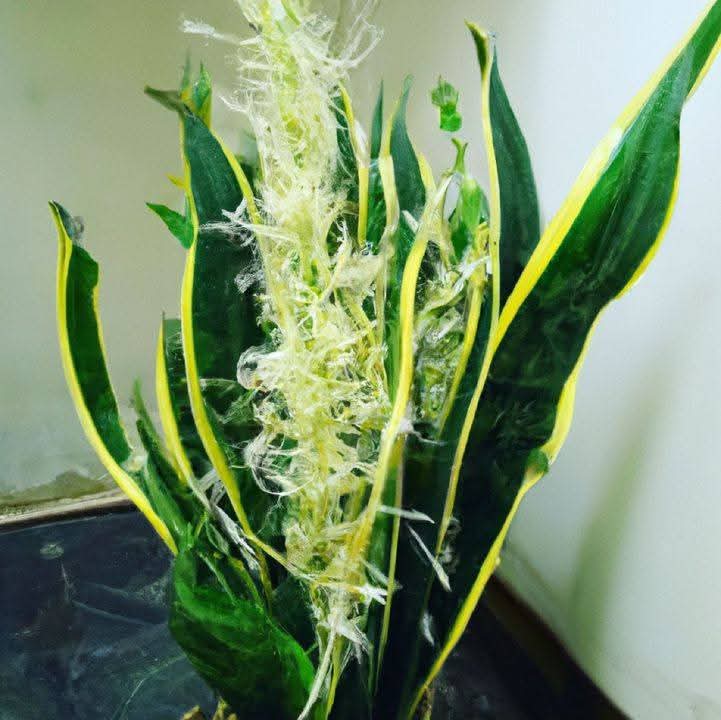
- What the flowers look like: The bloom is a spikes (inflorescence) emerging from the base or between leaves, with small tubular flowers, usually white-green or pale. They often emit a mild fragrance at night.
🌿 Key Conditions That Encourage Flowering
Below are the “ingredients” your snake plant needs — not in a pot, but in its environment and care — to have a shot at a bloom.
| Condition | What to Aim For | Why It Helps |
|---|---|---|
| Light | Bright, indirect light; occasional gentle direct morning/evening sun | Light is energy; flowering demands more energy than just leaf growth. Too little light and the plant won’t gather enough carbs to invest in blooms. |
| Watering / Dry Periods | Water sparingly; let soil dry out fully between waterings. Occasionally give a “dry stress” period | Overwatering suppresses flowering and can cause root problems. Some drought-like stress can signal the plant to reproduce. |
| Soil & Drainage | Well-draining, airy soil (cactus/succulent mix or soil + perlite/sand) | Good drainage prevents root rot and ensures roots are healthy and responsive. A boggy root zone kills flowering potential. |
| Root-Bound (Mild Stress) | Keeping the plant slightly root-bound; avoid frequent repotting | When roots dominate their pot, plants sometimes “think” resources are limited, pushing toward reproduction (flowering). Too roomy a pot leads to vegetative growth instead. |
| Temperature | Warm, stable environment: ~65‑85 °F (18‑29 °C); avoid cold drafts below ~50 °F | Stable warmth helps metabolic processes; cold stress or fluctuations can shock the plant and inhibit flowering. |
| Fertilization | Light feeding during growing season with balanced fertilizer (half strength), avoid over-fertilizing | Too much nitrogen encourages leaf growth, not blooms. Balanced feeding gives nutrients without forcing only foliage. |
| Patience & Minimal Disturbance | Let the plant settle; avoid moving, repotting, or shocking when buds appear | Disturbing a flowering plant can abort the bloom. Once a spike is formed, minimal interference is best. |
🧰 Step-by-Step Methods to Encourage a Bloom
Here’s a practical, month-by-month plan you can try:
- Select the right specimen
- Use a mature plant (usually several years old). Young, small snake plants rarely bloom.
- Choose a pot that is not excessively large — a snug but not suffocating space.
- Place it in optimal light
- Position near an east- or west-facing window with bright indirect light.
- Avoid moving it frequently; keep lighting consistent.
- Use proper soil & pot
- Ensure drainage holes.
- Use cactus/succulent mix or amend regular soil with perlite or sand.
- Implement a watering schedule
- Water only when soil is bone-dry.
- During cooler or low-growth months, water less frequently.
- Occasionally skip a watering to mimic dry season stress.
- Fertilize carefully
- In spring and summer, feed once every 4–6 weeks with diluted, balanced fertilizer.
- Do not fertilize in the fall or winter.
- Resist frequent repotting
- If roots are tightly circling but not causing damage, leave them be.
- Only repot when absolutely necessary (roots pushing out holes or pot cracking).
- Watch for a flower spike
- If you see a thin stalk emerging, leave it alone. Don’t move the pot, don’t change its environment.
- Some spikes produce nectar; some bloom at night.
- After flowering
- Once blooms fade, trim the stalk to its base.
- The same cluster generally won’t bloom again, but new spikes may form later.
💖 For Lovers of Plants (and People)
Plants are like relationships — they ask for patience, consistency, care, and occasionally a little stress (growth happens just outside comfort). If you treat your snake plant like someone you care about:
- Talk to it as you water, rotate it gently for balance.
- Observe its changes — new leaves, color, stiffness.
- Document each attempt; celebrate small successes.
When that rare bloom comes, it feels like a shared triumph: “We made this happen.”
🏁 Conclusion & Encouragement
Getting a snake plant to bloom may be a long shot — but it’s far from impossible. By providing bright indirect light, excellent drainage, controlled watering, mild root restriction, careful fertilization, and patience, you’re giving your plant its strongest chance to reward you with flowers.
Even if your snake plant never blooms, the process of caring more deeply improves its health and your enjoyment of it. And when it does bloom — the fragrance, the surprise, the reward — it feels like magic in your home.
If you want a quick checklist or care calendar (monthly tasks) for your snake plant, I’d be more than happy to put that together for you.